

I went through 20 hours of labor for this?
Enjoy an exclusive excerpt of "The Alchemy of Motherhood"




Was it all for nothing?
When 20 hours of labor turns into a C-section
This is an exclusive excerpt of The Alchemy of Motherhood by Casey Keen
As I sat in the sterile, overly air-conditioned waiting room for my first prenatal visit, I felt an uneasy mix of excitement and apprehension. Like most, I had been told that pregnancy was a time of glowing skin, joyful anticipation, and gentle hands guiding mothers through each stage.
My eyes roamed the colorless walls of my obstetrician’s waiting room, where posters about flu shots and heart health were meticulously aligned; conspicuously absent were booklets that might speak to the turmoil brewing inside a mother-to-be. Although the pamphlet stack for STDs was overflowing, pamphlets for childbirth and postpartum were nonexistent.
I’d pictured that moment differently. Some version of it had lived in my mind, but contrary to what I’d imagined, I was disconcerted by the absence of support and resources offered to pregnant women. My fingers traced the armrest of the hard, plastic chair I occupied, mirroring the cold absence of understanding. Where were the informational brochures on early pregnancy, nutrition, and what to expect? I shifted uncomfortably, pulling a tissue from the box placed almost mockingly on a side table covered with outdated US Weekly magazines.
This was my first indication of a disconnect between motherhood and medicine.
My name was finally called, rousing me from my ruminations. The nurse practitioner was kind and knowledgeable, ticking off a list of dos and don’ts and scheduling the next appointments and ultrasounds. But at my first visit, a live wire of anticipation, I received not even a welcome packet, no resource list to pore over in the quiet hours when uncertainty weighed heaviest.
Each visit became a ritual of checking vital signs and fetal development, but the information I received often felt impersonal and insufficient. The brief appointments left little room for my myriad questions and intense confusion. What seemed comprehensive in the moment quickly revealed itself to be a perfectly crafted illusion of care—each visit a checkpoint rather than a conversation.

I was fortunate to have had a relatively easy pregnancy. Physically, I felt well for the most part, and for that I was thankful. But my gratitude was tempered by the detached nature of my prenatal care. The structure of my doctor’s office felt transactional, not relational. Instead of developing a bond with one or two providers, I was required to rotate through every doctor in the practice. Each appointment felt like hitting reset; each time, I explained my concerns—again—to someone who barely skimmed my chart before walking into the room. There was no continuity, no sense of truly being seen or understood. I never imagined that I would feel more like an observer than an active participant in my own childbirth experience.
***
After more than twenty hours of labor, it was time to push. A phrase I had heard so many times in movies, in birth stories, in casual conversations among mothers, now felt foreign, surreal. Push. As if my body, depleted and shaking, would simply respond to a command.
“Push,” the nurses urged, a chorus of strangers coaching my most intimate performance.
Their faces blurred, each indistinguishable in my tunnel vision, as I focused solely on the task at hand. Every piece of me strained toward a climax that felt out of reach. My body had become a battleground of effort and desperation, each push a plea for release, each contraction an agony. But my son remained a promise that grew more intangible with each passing moment.
The clock’s hands mocked me. Each tick stretched into an eternity as I pushed, heaved, and gasped under the unforgiving lights. Two hours slipped by in a grueling rhythm of exertion and respite. My limbs trembled with the effort. Muscles I never knew existed burned with an intensity that felt otherworldly, the kind of pain that grips the soul as much as the flesh. My body, which had carried my son for months, now seemed unwilling to let him go. And with each failed push, a pressing fear settled in. What if I can’t do this? What if, despite everything, my body won’t cooperate?
Then came the final verdict. The doctor returned, this time not to check progress, not to offer words of encouragement, but to tell me that it was over. That my body, my effort, my labor, had been for nothing.
“We need to do a cesarean section,” she announced. “Your pelvic bone is too small.”
The words struck louder than the thunder outside through the haze of my exhaustion and pain. As I lay there, a shadow-cum-victim of intervention, time felt disjointed, splitting into shards of sensation and sound. Gloved hands, whispered conversations between nurses, the distinct rustle of medical supplies being prepared. A nervous energy buzzed through the part of me still tethered to the world. Detached, I watched as a nurse began prepping me for surgery…
This book excerpt was originally published here on the-midst.com.

We’re treating ourselves today and think you should too.
To celebrate Mother’s Day, I’m treating myself to Me Time at a coffee shop, a mini workout and chair massage at the gym, ordering in dinner with the fam, and gifting myself something from The Midst Gifts for Women by Women gift guide.
Many of the products and services are designed by women who are members of The Midst Founder network of women over 40 entrepreneurs and solopreneurs.
— Amy Cuevas Schroeder
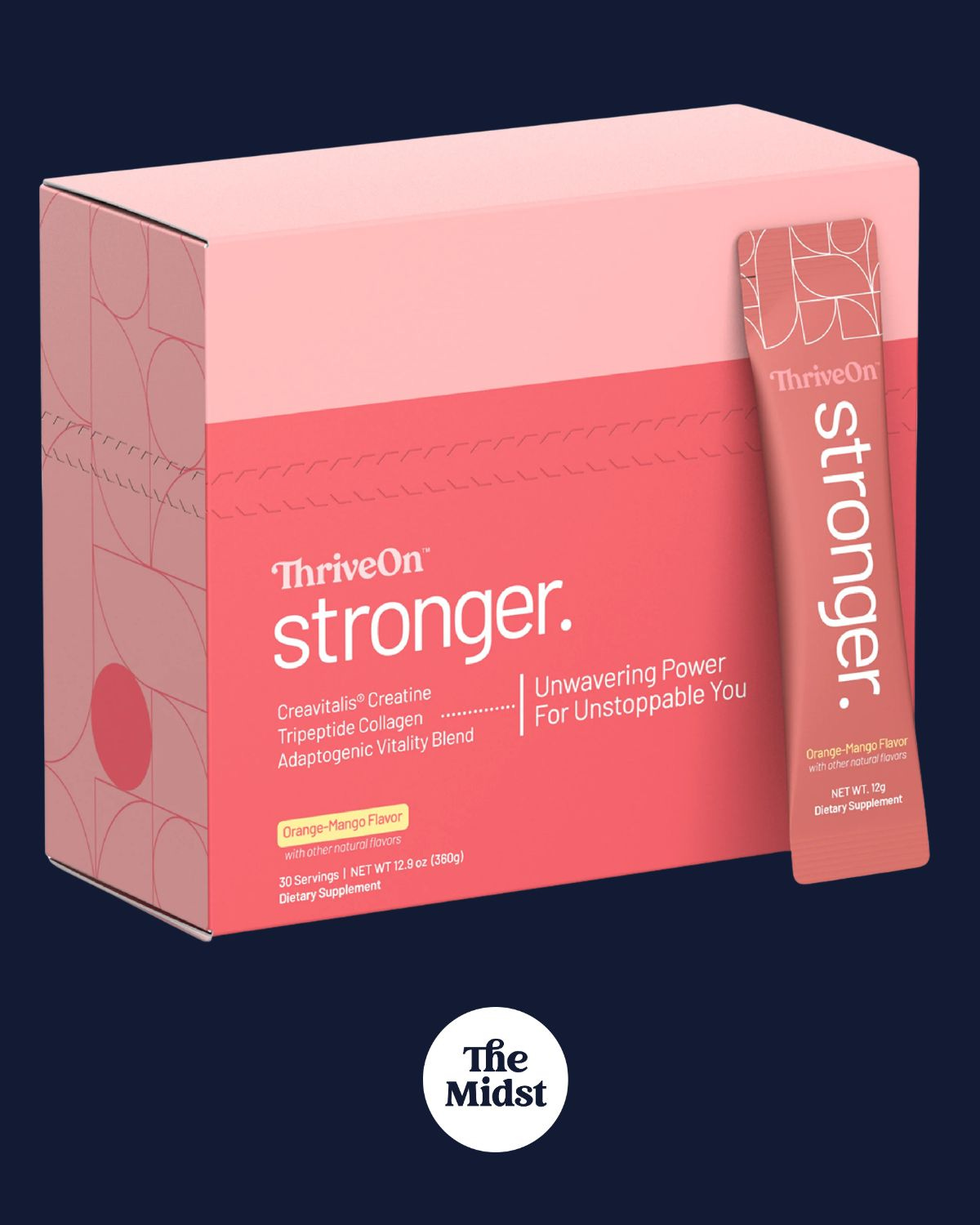
ThriveOn Stronger supports brain, bones, muscles, mood, cellular energy, sleep and skin for women in midlife. The daily supplement powder contains Creavitalis® Creatine, Marine Tripeptide Collagen, and more.
Just for readers of The Midst: Save 20% on ThriveOn Stronger when you use this special link: https://trythriveon.com/discount/TheMidst. The discount will be applied automatically during checkout and is good on your first order. ThriveOn offer a no-questions-asked money-back guarantee.
The co-founders of ThriveOn, Victoria and Andrew O’Hare, are members of The Midst Founder network. Read their startup story here.
 | A guest post by
|
I let out an audible gasp when I read the line about the too small pelvic bone. Not at all a reasonable, or clinically sound, thing to say. I recognize the same ticking clock, and managed atmosphere, in my own hospital births.
After delivering babies for the better part of thirty years it was always painful when a long labor and long pushing effort ends in c section for one reason or another. Unfortunately we don’t know that that will be the outcome when we start out, so unless we offered everyone a c section just to avoid that possibility, it’s hard to say that we could avoid that ultimate surgical outcome. I always found that the best solution was always getting to know my pregnant patients (I had a solo private practice for over ten years) We would discuss all the possibilities ahead of time. Only if they trusted me and had shared decision making would they not feel so badly when /if one of those outcomes occurred. I also would be disappointed for the patients who did not get the deliveries they wanted.