

Move over, brain fog. Our minds peak at this age:
+ Exclusive excerpt of ‘Talking to the Wolf’ by Rebecca Chace • Justina Blakeney to headline our September event in L.A.!




You’re not declining. You’re peaking.
New research says the best version of your brain arrives in your 50s — and the science might surprise you.
If you’ve ever fumbled for a word mid-sentence, walked into a room and forgotten why, or felt like your brain is running on half its usual RAM, I feel you, sister.
Perimenopausal brain fog is real, documented, and pretty annoying. But here’s the good news: a new peer-reviewed study published in Intelligence suggests that when it comes to overall cognitive and psychological functioning, humans actually peak between the ages of 55 and 60.
I just turned 50 and am in the thick of peri brain fog, so I’m excited about a clear-headed future.
Researchers Gilles Gignac and Marcin Zajenkowski analyzed age-related trends across 16 different cognitive and personality dimensions — things like reasoning ability, emotional intelligence, financial literacy, moral judgment, and personality traits like conscientiousness and emotional stability. They converted all the findings to a common scale so they could compare apples to apples, then built a composite index of overall functioning.
The result? A clear midlife peak.
Of course, some things do decline with age. Raw processing speed, working memory, and fluid reasoning — the kind of quick, abstract problem-solving that lets you ace an IQ test — peak in your early 20s and slide from there. (Humbling, but also: who cared about your processing speed when you were 22 and making dumb decisions with it?)
But a remarkable number of things keep improving well into midlife and beyond. Crystallized intelligence — your accumulated knowledge, vocabulary, and expertise — keeps growing into your 60s. Emotional intelligence peaks around the mid-40s. Financial literacy rises steadily and doesn’t peak until the late 60s. Moral reasoning keeps deepening across the lifespan. And perhaps most meaningfully: conscientiousness and emotional stability both increase significantly from young adulthood through midlife.
In other words, the parts of your brain that make you wise, steady, and good at navigating real life are still on the way up.
The researchers also note that this pattern neatly explains something that’s always seemed a little paradoxical: why peak career achievement — highest earnings, greatest occupational prestige, most significant leadership roles — tends to happen in the early-to-mid 50s, even though fluid intelligence peaked decades earlier. Because real-world success doesn’t run on raw processing speed. It runs on judgment, experience, emotional regulation, and the ability to read a room. And those things take time to build.
The study’s conclusion is blunt: people best suited for high-stakes decision-making roles are unlikely to be younger than 40 or older than 65. Your 40s and 50s aren’t the beginning of the end. They’re the main event.
So the next time brain fog makes you feel like you’re losing ground, remember: you may be forgetting where you put your keys and approaching the most psychologically capable years of your life. Both things can be true. The fog is a season. The wisdom is structural.
TL;DR
Emotional intelligence peaks in your mid-40s. The ability to read situations, manage your emotions, and navigate relationships hits its high point right in perimenopause territory.
Financial wisdom keeps growing until your late 60s. The study found that financial literacy rises steadily across adulthood — one study cited showed 81% of adults over 65 correctly answered financial questions, versus only 37% of those aged 18–24.
You get better at letting go. Resistance to the “sunk cost fallacy” — the ability to stop throwing good money (or energy, or time) after bad — improves with age. Older adults were twice as likely as younger adults to make the more rational choice.
The traits that matter most for real life keep improving. Conscientiousness and emotional stability — the traits most strongly linked to career success, health, and life satisfaction — both rise through midlife.
Brain fog ≠ brain decline. Processing speed does slow down. But judgment, wisdom, moral reasoning, and emotional intelligence are still on the way up. The parts of your brain that make you effective at actual life are still developing.

Speaking of perimenopausal brain fog: A nutritionist’s guide to thinking clearly
By Sally Duffin
About three weeks ago, I was rolling through my work day, ticking off tasks, and thinking about lunch — when it hit me. I had completely missed a meeting. The meeting had been scheduled well in advance and was logged in my Outlook calendar and handwritten diary (I’m old-school!) but somehow, my perimenopausal brain had completely forgotten about it. Cue quick apologetic emails to colleagues.
Occasional forgetfulness is part of normal life, especially when that life is full and active. But during perimenopause, forgetfulness, poor concentration, and the dreaded brain fog ramp up a gear. One minute you’re at the top of your game, juggling the demands of work, family, and social life, and the next it feels like your brain is made of wet cotton wool.
For many women, cognitive changes like brain fog and memory loss are some of the earliest signs of perimenopause. They creep in along with emotional changes like anxiety and mood swings, long before periods begin to stop. As a nutritionist, I’ve heard from women who fear they are losing their minds and are worried about early onset dementia, when in fact these shifts are all part of the menopausal transition.
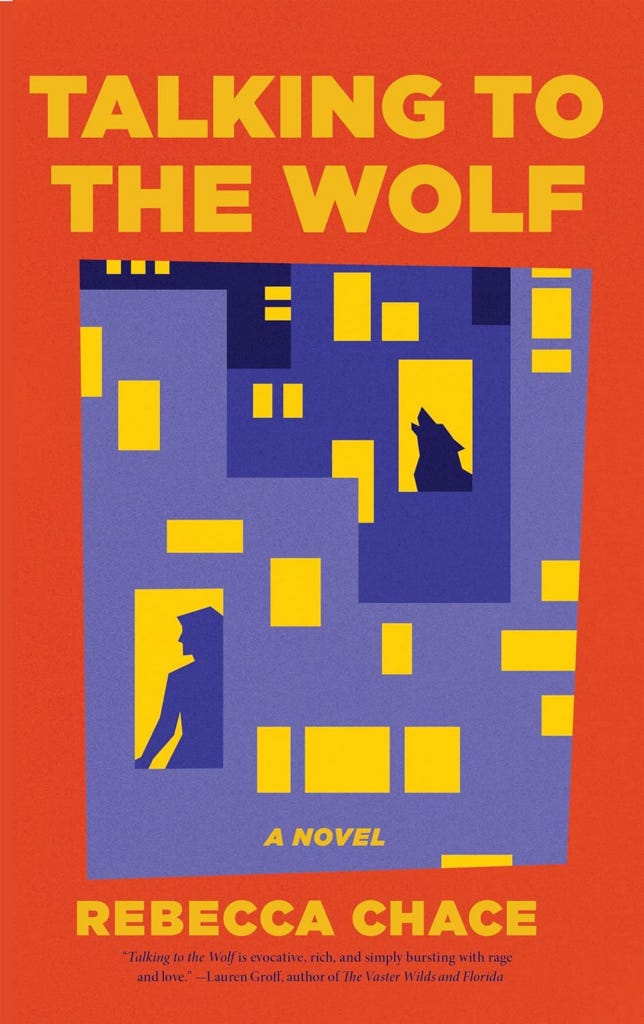
An exclusive excerpt of Talking to the Wolf by Rebecca Chace
Enjoy this slice of Talking to the Wolf, which is about a failed rockstar, an awarded scientist, a work-obsessed misanthrope, and a ghost, whose untimely death ruptured the once-solid quartet, steel themselves for their 35th high school reunion dinner. Set during a surprise snowstorm in New York City the day of the reunion, the novel is a lyrical exploration of female friendship, friend breakups, and reconciliations across decades.
CORA
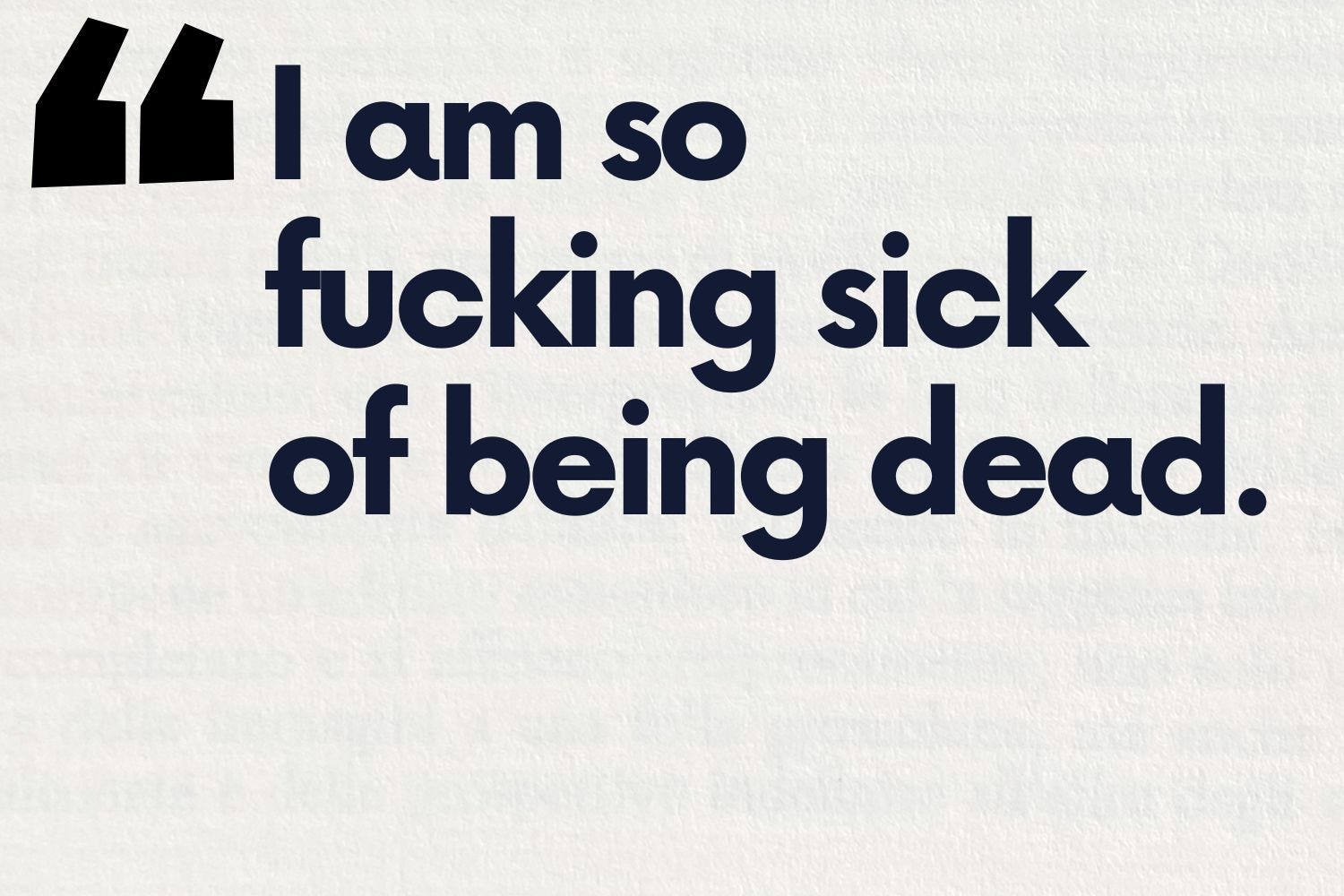
I am so fucking sick of being dead!
I want to shake the walls, rip up the subway tracks, melt those thick metal wires running through the salty dirt beneath the pavement. I know this city as well as my own body and I counted on my body to be smarter than it was—muscles, veins, legs, wrists, fingers, eyes, tongue. I’ve always been strong. It scared people sometimes, my broad shoulders and muscled arms. Those A & R guys didn’t expect a rugby player in heels. It was funny to watch their expressions change, then scramble to cover it up. But I tried not to smile too much at first; it’s not my job to help them relax. Just another work dinner and it wasn’t raining hard, so I grabbed a Citibike to sweat out the alcohol and sleep better next to the man I didn’t want to leave. I knew I’d make the light, standing on the balls of my feet against on the pedals to go faster. I was nine years old, pumping up a hill before the long glide down the other side, braids flying back with no helmet. Who carries a helmet in an expensive shoulder bag?
I flew through the light and that taxi just kept coming, tires sliding on wet asphalt like a wall of metal. Blaring horn and bike handles twisting down and away. The accident happened so fast, and ever since my body hit the pavement it’s like I’m stuck and unstuck at the same time. I’m caught in the rough first layer of a fresco, lines drawn in that pigment the color of dried blood, my body marked out while the plaster’s still wet, trapped in some unknown geometry of movement and the smell of iron.


SAVE THE DATE
Self-made design genius Justina Blakeney to headline our L.A. event in September!
You’re the first to hear: I’m excited to host a live conversation with my former Venus colleague Justina Blakeney on September 18 in Los Angeles. We’ll share more details in the coming weeks here on The Midst Substack. Follow Justina here on Instagram: @thejungalow.

Lisa Congdon live with The Midst
Join our conversation with the renowned self-taught artist, “late bloomer,” and public political voice
June 1, 2026 | 1 pm PDT • 3 pm CDT • 4 pm EDT
Lisa Congdon is best known for her colorful, graphic style and her exploration of themes of joy, liberation, and inclusion. She makes art for clients around the globe, including The Library of Congress, The U.S. Postal Service, Wired Magazine, Amazon, Google, Smith Optics, Warby Parker, Comme des Garcons, Peets Coffee, REI, and MoMa, among many others.

Designed for entrepreneurs, solopreneurs, and experienced professional women over 40.
Our first mastermind is happening right now, and it’s going so well that I’m planning ahead for the next mastermind that kicks off in September. The deadline to apply is August 14.
 | A guest post by
|
I’ve seen the pattern you’re describing countless times with professionals navigating midlife transitions. The science about cognitive peaks in the 50s really resonates with my experience mentoring second-half careers: the clarity, judgment, and emotional intelligence you develop over decades can far outweigh the raw processing speed of youth. It’s a reminder that midlife isn’t decline—it’s leverage.
I wonder how many organizations are actually structured to recognize and benefit from this stage of cognitive peak.