

Stress is officially at an all-time high
+ It's not just in our heads. Data proves it. Here's how to deal ...



Who isn’t stressed?
A good way to get a sense of how people are feeling about life is to look at trending Google searches. The terms “feel overwhelmed” and “feel stressed” are being searched in the U.S. more than ever this year, according to an April 1 Google Analytics report. Same goes for “burnout at work” and “burnout from life,” and search interest in “cortisol” has nearly doubled since the start of 2026.
No kidding.
There are several documented studies from late 2025 and early 2026 about just how stressed we all are, so imagine what the stress level is like now, with even more socioeconomic uncertainty piled on in recent weeks.
So let’s take a breath, yeah?
We know a thing or two about stress here at The Midst. And the bulk of you brilliant readers are ~98% women over 40 in the midst of some of the heaviest sh*t in your lives.
Here are a handful of insights from our archive …

How to stop stressing about lowering your cortisol — while actually lowering your cortisol
By Amy Horton
Unless you are completely off the grid (in which case, you won’t be reading this), you’ve most likely heard the term cortisol and probably know it’s fairly important to pay attention to, especially in midlife. But take one foray into the TikTok land of #cortisol videos and it will instantly spike your, well, cortisol.
So how do we make sense of it all and begin to address the crazy of cortisol without adding even more stress to our lives? I mean, what’s the point of cramming 27 new self-care practices into your day if trying to do so ends up stressing you out more than when you started?
At 43 years old and perimenopausal, I’m as curious as the next GAL, so I set out to sort through the noise.
What is cortisol?
According to pausitive health (a resource for all things menopause), cortisol is a hormone that is naturally produced in our bodies, necessary for waking us up in the morning and keeping our energy levels up. But stress can raise our cortisol levels higher than we need them to be, which can have negative health effects.
As we age, cortisol levels naturally increase for both men and women. However, women are also dealing with fluctuating estrogen levels as they go through the menopause transition, which can cause spikes in cortisol — it can even make you more sensitive to stress than you might have been previously.
Cortisol and (peri)menopause
To find out more about how cortisol levels are affected during the menopausal transition, I connected with Z. Colette Edwards, MD MBA, the founder and chief medical officer of pausitive health. Edwards shared this article with me, explaining the science-backed link between cortisol and menopause.
During the menopausal transition, the balance of hormones — estrogen, cortisol, and progesterone — changes and those shifts, along with the typically increased stress experienced during this phase, can make menopause symptoms worse. While symptoms can vary from person to person, some common symptoms are hot flashes, night sweats, sleep problems, weight gain, migraines, depression, and hair loss.
What do we do about cortisol?
It’s one thing to make sense of the facts. It’s another thing to know what we can actually do to maintain healthy cortisol levels. I’ll be the first to admit that the more I learn about cortisol and the menopausal transition, the more stressed I become. (Hello, overwhelm!) So I went back to the experts to find out how to combat the stress that comes with dealing with all the stress!
Mindset matters: Don’t stress about stress
The first thing, says Edwards, is that we need to “set an intention and a commitment not to be stressed about being stressed.” She says that has to come first, before trying to take action on reducing stress — which can be many things like exercising, journaling, meditation, addressing diet, etc.
Dr. Thara Vayali, ND, Chief Medical Officer of hey freya co., also pointed out the importance of being able to notice our mindset around stress. “When we start to look at any wellness behavior as a ‘to do’ rather than a ‘to feel’,” she says, “we fall into the trap of trying to appear perfect and good either to ourselves or others, which furthers the problem.”
“When we start to look at any wellness behavior as a ‘to do’ rather than a ‘to feel’, we fall into the trap of trying to appear perfect and good either to ourselves or others, which furthers the problem.”
— Dr. Thara Vayali, ND, Chief Medical Officer of hey freya
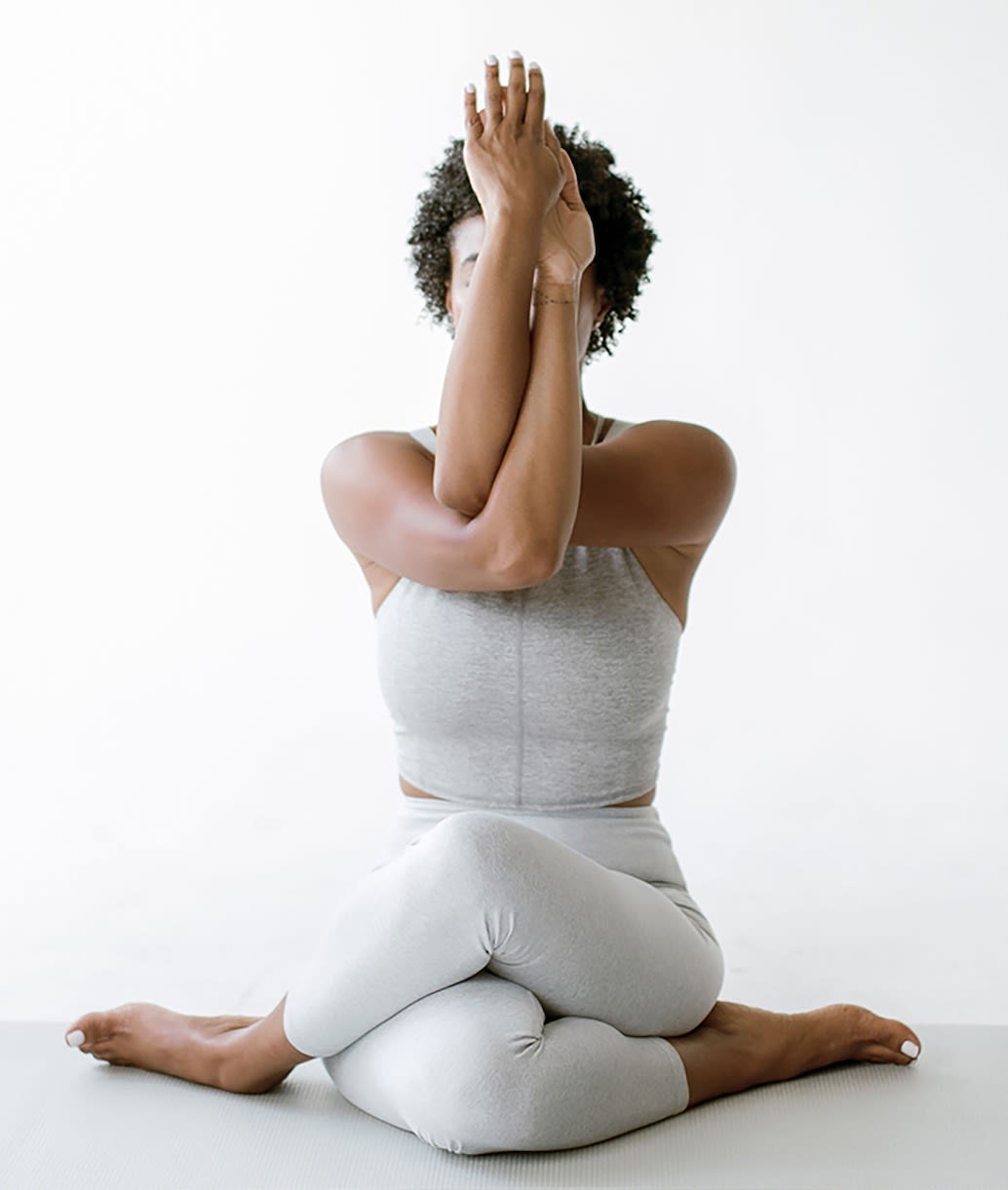
The art of letting go
My body resisted the deep twist, my breath was shallow, and my mind was fixated on holding the pose — on doing it right.
“Find steadiness and ease,” my instructor reminded us. “Flow … let go.”
Let go? I had always believed strength meant pushing through, enduring. But as I exhaled and softened, something unexpected happened — my body realigned, my breath deepened, and instead of falling, I found stability. I found balance.
That moment taught me something profound: clinging creates tension, while release creates space. And this isn’t just yoga philosophy — it’s neuroscience.

The science of letting go
Our brains are wired to resist change. The status quo bias, a cognitive tendency studied in behavioral psychology, makes us more likely to stick with what we know — even when it no longer benefits us. We hold onto jobs, relationships, and identities because they feel familiar, even when they no longer serve us.
But holding onto what isn’t working creates stress. Research shows that psychological attachment — whether to a negative thought pattern, a toxic relationship, or an outdated identity — activates the amygdala, the brain’s threat response center. This keeps us in a state of chronic stress, elevating cortisol levels and impacting both our mental and physical health.

Managing midlife anxiety
By Sally Duffin
Most women are familiar with feelings of anxiety. Whether it’s a few pre-menstrual jitters, anxiety about work, or worrying about your child on their first day at school or college, we know what it’s like to experience that sense of panicky dread and uncertainty. But during midlife, a new kind of anxiety emerges. One with no particular rhyme or reason but enough power to make you think you’re losing your mind.
Katherine Tyack-Grant, from Yorkshire, UK, was in her early forties when she began to experience overwhelming anxiety.
“We had recently moved house and the cat went missing for a few days, which made me feel a little anxious,” she explained. “But then it began to increase. I was incredibly anxious about everything and felt like I couldn’t breathe properly, and my heart was racing.”

Can stress be a good thing?
And when does it turn into distress overload?
By Sally Duffin
Stress gets a bad rap. We say that work is stressful, the kids are stressing us out, there’s too much to do, and we need to learn better stress management. But what if stress isn’t all bad? What if we’ve become programmed to think of it as a negative, when in fact a little bit of stress might just be good for us?
What happens when we’re stressed?
Whenever we’re faced with an exciting or challenging situation, the nervous system switches into “fight or flight” mode. The adrenal glands pump out the stress hormones epinephrine and cortisol, which make your blood pressure rise, pulse increase, and pupils dilate. You might feel tension or butterflies in your stomach, and may need to dash to the bathroom.
These are all normal responses designed to heighten your senses and mobilize energy stores, so you can either handle the situation or get away from it. In cavewoman times, this would have meant dealing with a rampaging woolly mammoth; nowadays we’re faced with traffic jams, an angry boss, and sassy teens — not so easy to deal with or run away from.

Can stress be a good thing?
Sometimes, yes. There’s a sweet spot on the scale of stress called “eustress”, which means “good stress”. First defined by the father of modern stress theory, Dr. Hans Selye, eustress describes any situation that invokes optimal levels of stimulation and results in a sense of growth, mastery, fulfillment, or achievement. This might be starting a new job, moving, giving a speech in public for the first time, or passing your driving test.
Alongside eustress, small amounts of uncomfortable stress or distress can also be beneficial. After all, the “fight or flight” response is designed to be protective, not harmful. For example, short bouts of stress can improve alertness and concentration. Ever noticed that a tight project deadline can make you come up with even better ideas? That’s the positive effect of stress hormones on the brain, heightening your performance.
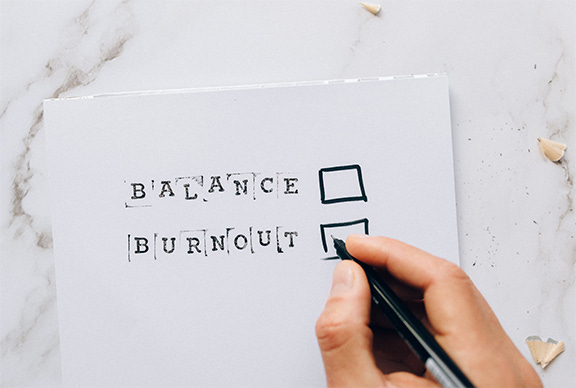
From good stress to distress
Problems arise when too much eustress or distress tips over into chronic, ongoing distress. At this point, we no longer experience that warm glow of achievement or sense of growth, because the stressful situations are relentless and overwhelming. The challenges outstrip our capacity to cope. And rather than having short-term bursts of “fight or flight”, we become permanently stuck in this alarm state, unable to relax and rebalance.

Let’s talk about stress, baby. What are you stressing about, and how are you coping?

Inner Pace Reset
Our friend Stephanie Lewis is hosting Seasons of Stillness, a simple weekly rhythm to help ease stress, mental chatter, and the pressure that builds through the day.
April 10– May 1, 2026
Weekly reflections and 3 simple practice lanes to rely on (most practices are 3–12 minutes)
Live online group practice circles with replay
Registration ends soon!
 | A guest post by
|
Something simple that's been working for me - 5 slow breaths before reacting to anything stressful. Sounds basic but genuinely changes how I respond.
This was helpful, thanks for posting!