

Perimenopause in prison
+ Midlife is an invitation to stop organizing yourself around achievement and start organizing yourself around meaning.



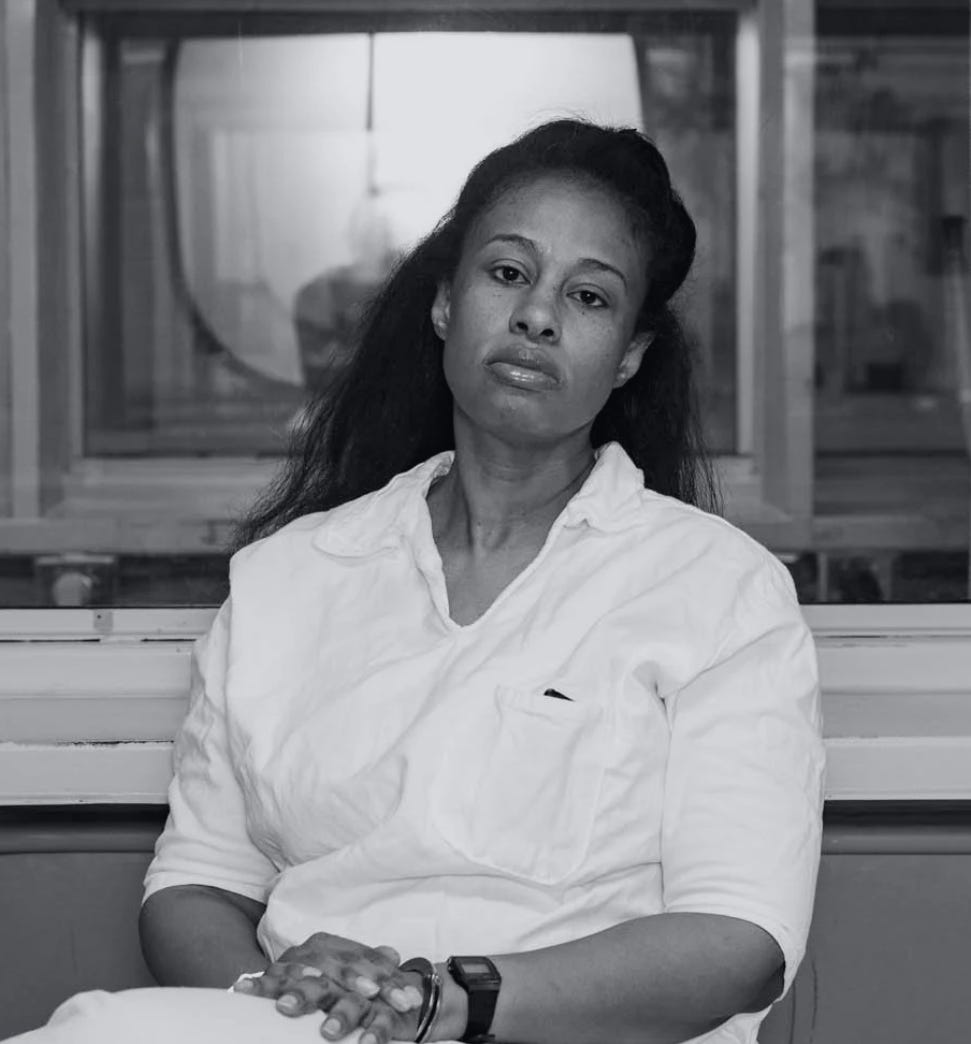
40% of incarcerated women are in or approaching menopause
Imagine going through perimenopause without Google, without a sympathetic doctor, without hormone therapy, without even the word perimenopause in your vocabulary. Then imagine being formally punished for the symptoms.
That’s the world a new investigation from The Marshall Project and The 19th maps in detail. The female prison population has grown 600% since 1980. And the cultural peri/menopause conversation many of us are now part of — the books, podcasts, celebrity interviews, doctors specializing in menopause, The Midst — has barely reached most prisons.
An article in The Story Exchange tells the story of Kwaneta Harris, 53, a former nurse imprisoned in Texas, who spent three years cycling through specialists for shoulder pain, heart palpitations, acne, brain fog, and hair loss before a TED Talk on NPR gave her the word perimenopause.
Even after diagnosis, it took two more years for Harris to get a Premarin prescription — which was never refilled. Other women interviewed have been written up for blood-stained uniforms (when adequate menstrual products weren’t available), not pulling the covers over themselves through night sweats, and mood swing–related behavior that landed them in solitary. Disciplinary infractions can justify parole denials. Untreated perimenopause is, functionally, costing women their freedom.
But there is early hope: Impact Justice has launched a first-of-its-kind program training California prison medical providers on perimenopause care, with conversations underway in Idaho, Michigan, and South Carolina.
TL;DR
Perimenopause symptoms are routinely misread as misconduct in prisons — with consequences that compound across years and can affect parole.
Hormone therapy (MHT) exists in policy, but rarely in practice. Even one prescription is hard-won; refills are harder.
Women teach each other inside prison walls because no one else will. Community is the medicine.

The adults most lost in midlife aren’t the ones whose dreams failed
They’re the ones who arrived at the destination they chose when they were between 18–30 — before they knew themselves well enough to choose other paths.
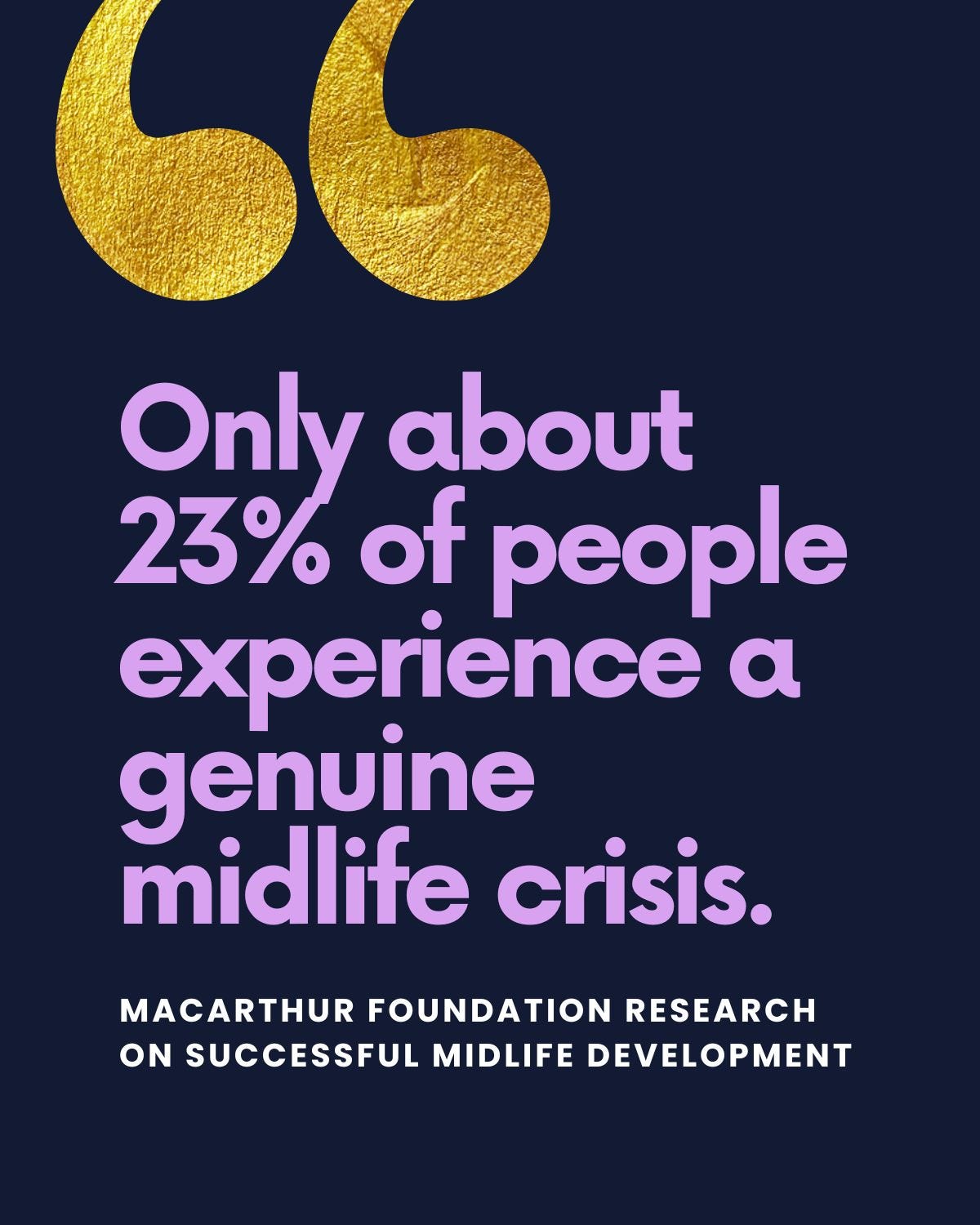
That sharp reframe of the conventional midlife crisis is the subject of this Silicon Canals story — I recommend you read it. Drawing on a MacArthur Foundation study that followed more than 3,000 midlife adults for a decade, the story notes that only about 23% of people experience a genuine midlife crisis — and when they do, it follows not the fear of aging but the arrival at a planned destination that doesn’t feel the way it was supposed to.
Counterintuitively, people whose early life plans “failed” may suffer less in midlife. Failure forced them to re-evaluate, pivot, and stumble into a plan B that actually fit. The people who succeeded at the inherited plan are the ones who, decades in, have to reconcile the person they’ve become with the person they wanted to become when they were 22.
Renowned psychoanalyst Erik Erikson's theory of psychosocial development proposes that personality develops in eight predetermined stages across the entire lifespan, from infancy to old age. The framework for midlife development centered on what he called generativity: the drive to contribute something lasting, to invest in the next generation, to build something that matters beyond yourself.
“The ‘crisis’ at midlife, in Erikson’s view, wasn’t existential despair but a developmental invitation,” writes entrepreneur Lachlan Brown. “It’s the point at which life asks you to stop organizing yourself around achievement and begin organizing yourself around meaning.”
TL;DR
Midlife disorientation is often a success story, not a failure story. It signals you arrived where you said you were going.
The “right” goals at 22 may not be your goals at 45. That’s growth, not crisis.
Generativity is the upgrade. Stop optimizing for outcomes; start asking what you actually want to leave behind.
A midlife pivot isn’t regression. It’s permission to choose, finally as yourself.
Read more about pivots in The Midst
Can a midlife career pivot connect you to your true purpose?
What happens when an award-winning author and TEDx speaker comes out at 50?


ThriveOn Stronger supports brain, bones, muscles, mood, cellular energy, sleep and skin for women in midlife. The daily supplement powder contains Creavitalis® Creatine, Marine Tripeptide Collagen, and more.
Just for readers of The Midst: Save 20% on ThriveOn Stronger when you use this special link: https://trythriveon.com/discount/TheMidst. The discount will be applied automatically during checkout and is good on your first order. ThriveOn offer a no-questions-asked money-back guarantee.
The co-founders of ThriveOn, Victoria and Andrew O’Hare, are members of The Midst Founder network. Read their startup story here.
Let’s hang out here on Instagram too.